
A Quiet Exit: The End of a 136-Year Watchmaking Story
## The News That Shocked the Industry
The news broke quietly at first, a rumor whispered in Swiss business circles before spreading like wildfire through the watch community. Rolex, the undisputed titan of horology, was shutting down Carl F. Bucherer, the watch brand it had acquired only eighteen months earlier as part of its landmark purchase of the Bucherer retail empire [citation:5][citation:7]. Employees were informed on a Friday morning in February 2025 that the brand's watchmaking operations would cease, the shutters on its remaining boutiques would be lowered, and its sales points within Bucherer stores would be cleared for other brands [citation:5]. Approximately 100 employees were affected, with Rolex reportedly working to relocate many of them within its own expanding operations [citation:5][citation:7].
For anyone who has followed the trajectory of Carl F. Bucherer, the news was hardly a surprise. The brand, despite its storied 136-year history and its pioneering work with peripheral rotor technology, had never managed to achieve consistent profitability [citation:5][citation:7]. In its best years, it generated sales between 80 and 100 million Swiss francs, but cumulative losses over its lifetime were estimated at around 250 million Swiss francs [citation:7]. As one industry analyst bluntly put it, "The strongest watch brand in the world does not need another sister brand, alongside Tudor" [citation:5].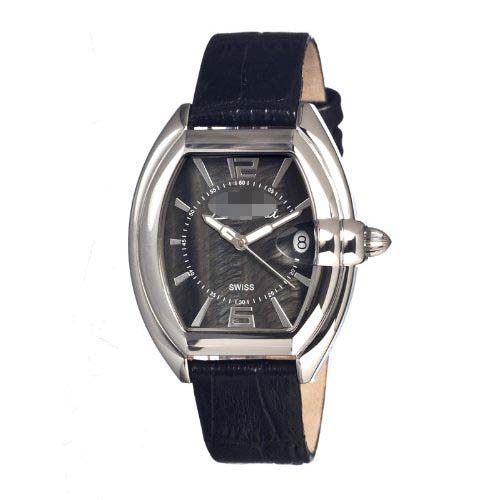
## A Brand Built on a Vision
To understand what is being lost, one must understand what Carl F. Bucherer was. The story begins in 1888, when Carl Friedrich Bucherer opened a jewelry and watch shop in Lucerne, Switzerland [citation:3][citation:19]. His two sons were destined from birth to follow him into the profession—one trained as a watchmaker, the other as a goldsmith. This unlikely marriage of jeweler's artistry and watchmaker's precision became the brand's defining characteristic from the very beginning [citation:3]. The authenticity and international reputation of the brand were deeply rooted in Swiss heritage, with watchmakers and artisans working under the same roof [citation:3].
The brand's history is punctuated with moments of genuine innovation. In the 1960s and 70s, Bucherer became one of the top three Swiss chronometer manufacturers, producing high-precision certified watches that became icons of their era [citation:3]. The Archimedes Supercompressor, water-resistant to 200 meters and combined with a world time mechanism, set new milestones in diving watch design [citation:3]. In 2001, the family made the bold decision to launch Carl F. Bucherer as a truly autonomous watch brand, signaling a new era with the Patravi TravelTec, a chronograph featuring three different time zones and a COSC-certified movement [citation:3].
## The Peripheral Rotor: A Technical Legacy
Perhaps the brand's most significant contribution to horology was its work with peripheral rotor technology. In 2008, Carl F. Bucherer introduced the CFB A1000 caliber, featuring a unique peripheral rotor and a 55-hour power reserve [citation:3]. This was a genuine innovation, a movement architecture that offered the advantages of an automatic winding system without obstructing the view of the movement's bridges and decorations. The brand went on to develop the A2000 caliber in 2016 and eventually the MR3000, which combined a peripheral rotor with a peripherally suspended and floating tourbillon [citation:8].
This technical expertise was real, and the brand's membership in the Fondation de la Haute Horlogerie in 2016 was recognition of its place among Switzerland's serious watchmakers [citation:3]. The problem was not that Carl F. Bucherer lacked skill or ambition. The problem was that the market did not respond. As one commenter on a watch forum observed, "The brand name couldn't carry that. Patravis can be had pre-owned for hundreds, not thousands" [citation:6].
## The Retail Network Paradox
The cruel irony of Carl F. Bucherer's fate is that it had access to one of the most privileged distribution networks in the watch industry. As part of the Bucherer retail group, the brand was sold in more than 250 stores worldwide, including 56 Bucherer showrooms across Europe and the United States [citation:16]. The United States was its largest wholesale market at the time, with around 50 doors [citation:16]. And yet, even with this unprecedented access, the brand could not generate enough consumer demand to justify its existence.
A jeweler who had carried the brand told JCK that they were recently notified the brand was being pulled and would become a "boutique-only exclusive," only to learn later that it was being shut down entirely [citation:5]. The retail network that was supposed to be the brand's greatest asset became, in a sense, its greatest liability. As one industry commentator noted, keeping Carl F. Bucherer alive meant devoting management time, skilled watchmakers, and valuable square footage at Bucherer stores that could be put to better use for more desirable brands [citation:16].
## The Rolex Calculation
When Rolex acquired Bucherer in August 2023, it was a landmark deal, giving the world's most powerful watch brand a major foothold in consumer retail for the first time [citation:13]. The acquisition was driven by the decision of J?rg Bucherer, the company's chairman who died shortly after the sale, to sell the business in the absence of direct descendants [citation:2]. For Rolex, the primary motivation was the retail network, not the watch brand. The Carl F. Bucherer marque came along as part of the package, almost as an afterthought.
Once inside the Rolex group, Carl F. Bucherer was subjected to the same cold, pragmatic analysis that Rolex applies to everything. The brand had never been profitable. Its sales were modest. Its name, while historically significant, lacked the prestige and recognition of Rolex or even Tudor. In a market characterized by extreme polarization, where four brands account for 55% of Swiss watch industry sales and Rolex alone commands a third of the market, there was no space for a third-tier brand that could not find its identity [citation:4][citation:15].
The decision to shut it down was, in the words of one observer, "the avoidance of a classic cost sunk fallacy" [citation:6].
## What Happens to the Watchmakers
The story is not entirely one of loss. The approximately 100 employees affected by the closure were reportedly offered positions within the Rolex group [citation:5][citation:7]. In particular, around 70 production staff from the Lengnau facility near Biel were expected to be offered jobs at Rolex's new factory in Bulle [citation:7][citation:10]. The brand's inventory was being repurposed for warranty repairs and service, and Rolex indicated it would continue to honor service and support for existing owners for years to come [citation:6].
This is how Rolex operates. It is a company that will kill an entire product line—the Cellini, the Oysterquartz, the Milgauss—if it does not perform, without sentiment or hesitation [citation:6]. But it will also take care of its people and its customers. The Carl F. Bucherer shutdown is brutal, but it is not callous.
## The Broader Implications
The closure of Carl F. Bucherer raises uncomfortable questions about the state of the Swiss watch industry. In a market where Rolex alone generates more revenue than Cartier, Audemars Piguet, Patek Philippe, and Omega combined, where is the space for mid-tier brands? The industry is polarizing, with ultra-high-end watches driving growth and affordable independent brands finding niche appeal, while the middle ground is collapsing [citation:4][citation:12].
The message from Rolex's decision is clear: if a brand cannot stand on its own merits, it will not be carried by its parent. Carl F. Bucherer had heritage. It had technical expertise. It had a retail network that most brands could only dream of. What it did not have was a compelling enough reason for customers to choose it. In the end, that was enough to seal its fate.
## A Final Chapter
For collectors who appreciated Carl F. Bucherer's unique blend of jewelry artistry and watchmaking expertise, the closure represents a genuine loss. The brand's Patravi and Manero collections, with their distinctive designs and innovative movements, will become relics of a different era in Swiss watchmaking—an era when a family name and a willingness to innovate were enough to sustain a brand.
The watch industry has always been Darwinian. Brands rise and fall. Names that were once dominant fade into obscurity. Carl F. Bucherer lasted 136 years, which is far longer than most. But in the end, even the backing of the world's most powerful watch brand could not save it from the simple, unforgiving logic of the market: a brand that cannot sell enough watches will eventually stop making them.