
# FROM MILESTONES TO MOVEMENTS: HOW 2025 REWRITES THE RULES OF WATCH ANNIVERSARIES
## Introduction: The Year of Living Historically
There is a peculiar ritual in the watch industry that repeats itself every few years. A brand reaches a round-number milestone—50, 100, 150, 250—and the machinery of celebration kicks into gear. Limited editions multiply. Vintage-inspired reissues flood the market. Marketing departments spin narratives about heritage and craftsmanship that stretch back further than most living collectors can remember. The result is often a parade of watches that look backward rather than forward, trading on nostalgia rather than innovation. But 2025 has refused to follow that script. This was a year in which anniversaries became catalysts for genuine creativity rather than exercises in self-congratulation. From Geneva to Le Locle, from the Vallée de Joux to the shores of Lake Neuchatel, brands used their historical milestones as launching pads for technical breakthroughs, design risks, and even new categories of watchmaking. The result is a year that will be remembered not for what it celebrated, but for what it created. For collectors who track the output of Wholesale Watch Suppliers, this distinction matters enormously.
## The Vacheron Constantin 270th: A Year of Impossible Achievements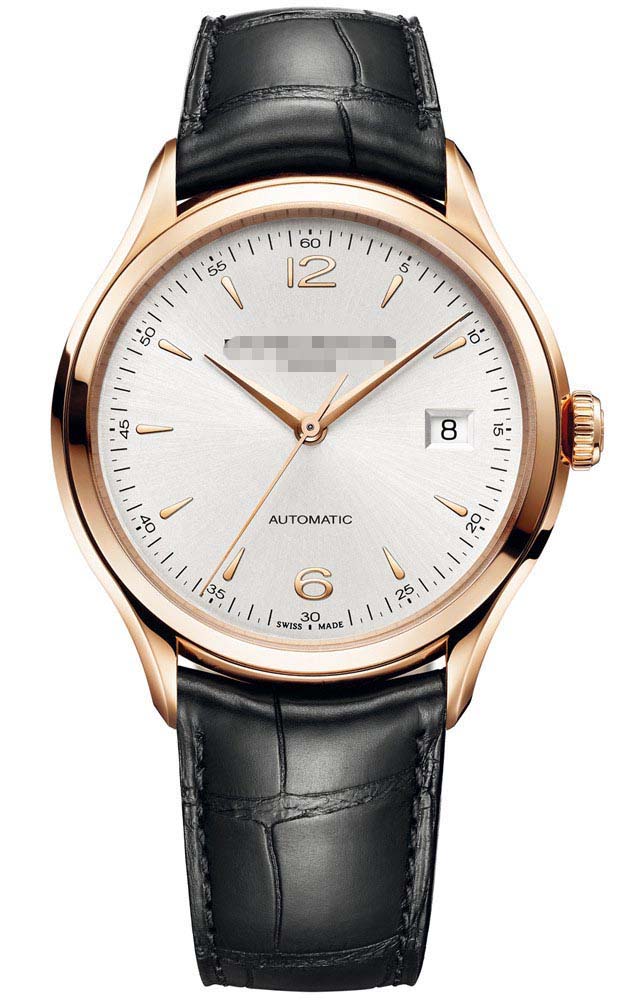
### The Solaria and the Limits of Complexity
No brand embodied the anniversary-as-catalyst philosophy more completely than Vacheron Constantin. The Geneva maison, founded in 1755, marked its 270th year with a series of releases that escalated in ambition throughout 2025. The first salvo was the Solaria, a watch that claimed the title of the most complicated wristwatch ever created. The name—derived from the Latin for “sun”—referenced the astronomical complications that packed its movement, including sunrise and sunset times, a perpetual calendar, and a celestial chart. The Solaria was not a watch designed for daily wear. It was a statement of capability, a reminder that Vacheron Constantin has been making complicated watches since before the United States existed.
### The 222 in Steel: The Relaunch of the Year
But it was the relaunch of the 222 in stainless steel that captured the most attention. The original 222, designed by J?rg Hysek for the brand’s 222nd anniversary in 1977, had long been overshadowed by its more famous contemporary, the Audemars Piguet Royal Oak. The 2025 reissue changed that equation. By releasing the 222 in steel—rather than gold, as many had expected—Vacheron Constantin positioned it directly against the Royal Oak and Patek Philippe Nautilus, the two giants of the integrated-bracelet category. The watch sold out within days. In a year of anniversaries, this was the release that generated the most genuine excitement among collectors [citation:1].
### The Traditionnelle Perpetual Calendar Ultra-Thin
Vacheron closed its anniversary year with the Traditionnelle Perpetual Calendar Ultra-Thin in three new 36.5mm executions—a remarkable achievement in miniaturization for a complication as demanding as a perpetual calendar [citation:5][citation:16]. At just 8.43mm thick, the watch housed the legendary Calibre 1120 QP, a movement whose base architecture dates back to the 1960s. The decision to offer the watch in non-gem-set pink gold and white gold, in addition to a diamond-set variant, signaled that Vacheron understood its audience: collectors who value mechanics over sparkle. The release capped a year in which Vacheron Constantin demonstrated that 270 years of history could be a foundation for innovation rather than a crutch.
## The Audemars Piguet 150th: Blue, Ceramic, and the Future of the Royal Oak
### “Bleu Nuit, Nuage 50” in Ceramic
Audemars Piguet’s 150th anniversary celebrations leaned heavily on the Royal Oak, as any reasonable observer would expect. But the brand avoided the obvious trap of merely reissuing vintage references. Instead, it expanded the Royal Oak’s material palette with new ceramic models in the signature “Bleu Nuit, Nuage 50” color—a deep, shifting blue inspired by the night sky over the Vallée de Joux [citation:4]. Ceramic had appeared on Royal Oaks before, but never in this specific shade, and the result was a watch that felt simultaneously familiar and genuinely new.
### The Perpetual Calendar Redesigned
More significantly, Audemars Piguet introduced an ergonomic redesign of its perpetual calendar, focusing on usability and comfort in daily wear [citation:4]. The perpetual calendar is one of horology’s most traditional complications, but AP’s approach was anything but traditional. The redesign prioritized ease of setting and reading, addressing the reality that most perpetual calendar owners interact with their watches far more frequently than they adjust them. It was an anniversary release that asked not “what did we make in 1972?” but “what should we make now?”
### The Code 11.59 Grande Sonnerie
The Code 11.59 collection, which initially struggled to find its audience when launched in 2019, continued its rehabilitation with new Grande Sonnerie Carillon Supersonnerie models in 41mm [citation:4]. These are among the most complex watches AP produces, and their presence in the anniversary lineup demonstrated that the brand’s commitment to the Code line is long-term rather than experimental.
## Other Milestones That Mattered
### Zenith’s 160th and the Calibre 135 Revival
Zenith celebrated its 160th anniversary with a decision that revealed much about its priorities: it revived the legendary Calibre 135, the movement that dominated observatory chronometry competitions in the 1950s [citation:12]. Rather than simply reissuing vintage watches, Zenith created new timepieces around the historical movement, demonstrating that its anniversary was about technical heritage rather than nostalgia.
### Blancpain’s 290th and the Fifty Fathoms Legacy
Blancpain, founded in 1735, marked its 290th year in 2025. The brand’s anniversary celebrations inevitably centered on the Fifty Fathoms, the dive watch that defined the category in 1953. But Blancpain, like Vacheron and AP, avoided pure retrospection. The year’s releases included technical updates to the Fifty Fathoms line that addressed contemporary demands for water resistance, legibility, and wearability—reminding collectors that heritage is meaningless without relevance.
### Girard-Perregaux’s 50 Years of the Laureato
Girard-Perregaux’s Laureato turned 50 in 2025, and the brand marked the occasion with a series of releases that celebrated the model’s distinctive octagonal bezel and integrated bracelet [citation:12]. Like the Royal Oak and the 222, the Laureato emerged during the 1970s boom in luxury steel sports watches. Its anniversary reminded collectors that the category’s origins were more diverse than the two or three names that dominate contemporary discussion.
## The Anniversary Paradox
### Why Some Brands Got It Right
The brands that succeeded in 2025 shared a common approach: they treated anniversaries as opportunities rather than obligations. Vacheron Constantin’s decision to release the 222 in steel was not historically accurate—the original was available in steel, but the gold versions dominated collector attention. The brand chose relevance over purity. Audemars Piguet’s ceramic Royal Oaks were not vintage reissues but contemporary expressions of a 53-year-old design language. Zenith revived a movement, not a watch. These choices reflect a mature understanding of what anniversaries are for: not to freeze a brand in amber, but to demonstrate that its values remain vital.
### The Risk of Nostalgia
Other brands, which need not be named, fell into the nostalgia trap. Their anniversary releases were indistinguishable from the watches they had made decades earlier, differentiated only by limited-edition engravings and special packaging. These watches sold, because collectors will always buy limited editions. But they contributed nothing to the conversation about where watchmaking is going. In a year when Vacheron Constantin released the most complicated wristwatch ever made and then followed it with a sold-out steel sports watch, mere reissues felt like a missed opportunity.
## Conclusion: What 2025 Taught Us About Heritage
The most important lesson of 2025 is that heritage is not a destination but a starting point. The brands that treated their anniversaries as launchpads produced watches that will be discussed for years to come—the Vacheron 222 in steel, the AP ceramic Royal Oaks, the Zenith Calibre 135 revival. The brands that treated anniversaries as endpoints produced watches that will be forgotten as soon as the next limited edition arrives.
For collectors, this distinction has practical implications. Anniversary watches are often purchased as investments, on the assumption that their commemorative status will preserve value. But 2025 demonstrated that the watches that appreciate are the ones that matter as watches, not as artifacts. The 222 in steel appreciated because it was a great watch that happened to be released during an anniversary year. The same cannot be said for every anniversary release.
As the industry moves toward the next cluster of milestones—Rolex’s 120th in 2025, Omega’s 180th in 2028, Patek Philippe’s 200th in 2039—the lessons of 2025 should inform both brand strategies and collector expectations. An anniversary is a gift: a moment when the world’s attention turns toward a brand and its history. What a brand does with that attention determines whether the moment becomes a memory or merely a marketing expense. The best releases of 2025 understood this instinctively. They honored the past by refusing to be confined by it. They celebrated history by making it. And they reminded us that the most meaningful anniversaries are not those that look backward, but those that use the past as a foundation for something the future might remember. For those who follow the work of a Watch OEM Manufacturer or observe the strategies of an ODM Watch Manufacturer, the year offered a masterclass in how to transform heritage from a liability into an asset.