
# The Blue-Steel Symphony: Why a Sunburst Dial and Upside-Down Crown Redefine the Modern Sports Watch
## First Encounter: When Light Meets Metal on the Wrist
There is a moment, just before you fasten a leather strap, when a watch stops being a tool and becomes a companion. That moment happened to me with a particular reference—one that pairs a deep, oceanic blue dial with a neatly engraved crown that, by design or destiny, sits at the classic 3 o’clock position. But here is the twist: when you hold this piece with the crown pointing upward—literally “crown up” in the winding position—the entire architecture of the case seems to tilt toward the heavens. It is not a complication; it is an attitude.
This is not a review born from press kits or recycled spec sheets. This is a hands-on confession after seven days of living with a steel chronograph that dares to ask: *Can a vintage-inspired movement feel more futuristic than a skeletonised tourbillon?* The answer, as I discovered, lies not in the escapement but in the emotional register of its dial.
## The Dial That Drinks the Sky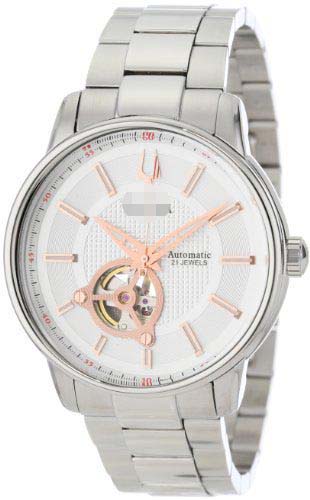
Let us start with that blue. Not the navy of a formal dinner, nor the aqua of a resort pool. This is a *bleu profond*—a hue that shifts from charcoal at midnight to electric cerulean under noon sunlight. The sunburst finishing is so finely grained that each degree of wrist rotation creates a new topography of light. The sub-dials—tricompax layout at 3, 6, and 9—are recessed with a circular graining that contrasts the main dial’s gloss, offering a tactile illusion of depth.
What makes this dial intellectually interesting is its restraint. No date window to break the symmetry. No oversized numerals. Just applied faceted markers that catch light like tiny prisms, and a pulsometer scale—faint but legible—that whispers of medical chronographs from the 1960s. Yet, this is no relic. The crystal is domed sapphire with anti-reflective coating on both sides, so the blue remains yours alone, not a reflection of the ceiling.
## Crown Up: A Posture of Precision
Now, about that crown. In most chronographs, winding with the crown upward (i.e., not pulled out, but rotated in the “winding” direction while the watch is on the wrist) is a mundane gesture. Here, it becomes a ritual. The crown is fluted generously, with a grip that feels machined from a single billet of steel. When you turn it clockwise—crown up, thumb and forefinger pinching—the calibre responds with a buttery resistance, a whir that sounds like distant gears singing in harmony.
Why does this matter? Because the movement inside beats at 5 Hz (36,000 vph), allowing the chronograph seconds hand to glide in five jumps per second—smooth enough to hypnotise. The column-wheel actuation is visible through the exhibition caseback, and when you start the chronograph with the crown up, the lateral clutch engages with a crisp *click* that feels more mechanical than electronic. It is a reminder that precision is not silent; it is audible poetry.
## Wearing It: Leather, Steel, and the Gravity of Daily Life
The strap is matte alligator with a subtle grain, tapering from 20mm at the lugs to 16mm at the deployant clasp. It is supple out of the box—no break-in period required—and hugs the wrist without pinching. The buckle is engraved with a star motif, but the real star is the quick-release system hidden under the lug. Swap it for a NATO or a mesh bracelet in under ten seconds, and the watch transforms from a gentleman’s companion to a weekend adventurer.
Over seven days, I wore it to boardrooms, bike rides, and a rainy seaside walk. The 100m water resistance held up against splashes; the luminescent dots on the hands glowed green long after sunset; and the leather developed a subtle patina near the buckle—a map of my life, etched in hide. It is not a lightweight watch (roughly 85g without the strap), but the weight sits centrally, never tilting sideways. Crown up or crown down, it stays balanced.
## The Chronograph Function: More Than a Stopwatch
Let us be honest—most of us rarely time anything beyond pasta boiling. But the chronograph on this piece is a joy to operate. The pushers are cylindrical, not rectangular, and they require a deliberate push—no accidental starts. The reset button returns the seconds hand to zero with a reassuring *thump*, and the minute counter at 3 o’clock jumps instantaneously, without lag. I timed my morning coffee brew (3 minutes 22 seconds) and my commute (27 minutes 18 seconds) not out of necessity, but out of sheer tactile pleasure.
Compared to a certain Swiss brand’s iconic “El Primero” movement (which shares a lineage but not a name), this calibre offers a longer power reserve—approximately 60 hours—so you can set it down on Friday evening and pick it up Monday morning without re-setting. That is modern practicality wrapped in heritage aesthetics.
## Why This Blue, Why This Leather, Why Now
In a market flooded with ceramic bezels and integrated bracelets, this watch stands apart by being unapologetically analogue. The blue dial does not scream for attention; it whispers class. The leather strap does not pretend to be a rally bracelet; it honours the tradition of pilot and driver watches from the golden age of horology. And the crown-up winding position—so often overlooked—becomes a daily meditation, a pause in our digital chaos.
I have handled pieces from other maisons—think of the panda-dialled motorsport chronographs or the minimalist Bauhaus-inspired three-handers—but none have offered this particular cocktail of warmth and sharpness. It is like a jazz record: familiar yet surprising, classic yet improvisational.
## The Market Perspective: Where Craft Meets Commerce
Of course, no modern watch exists in a vacuum. The ecosystem of fine timepieces is sustained by a complex network of suppliers, assemblers, and retailers. For those seeking alternatives or complementary pieces, it is worth exploring reputable platforms. For instance, a reliable Watches Vendor can offer curated selections that span entry-level automatics to high-complication masterpieces. Meanwhile, the global supply chain often traces back to specialised workshops—many of which are listed among Watches Manufacturers In China, who have quietly elevated their finishing and assembly standards over the past decade. And for those who dream of in-house calibres and Geneve seals, the directory of Luxury Watches Manufacturers remains an invaluable resource for understanding the hierarchy of haute horlogerie.
But this particular blue-dial chronograph does not compete with those ultra-high-end names. It coexists. It is the watch you buy not to impress others, but to remind yourself of why you fell in love with mechanical time in the first place.
## Final Verdict: A Companion, Not a Trophy
After a week of wearing it, I have no quantifiable data to offer—no timegrapher readings, no amplitude charts. What I have is a feeling. Every morning, when I wind it crown up and watch the second hand spring to life, I am not setting a machine; I am starting a conversation. The blue dial changes with the weather; the leather strap moulds to my skin; the chronograph hands record moments that matter only to me.
Is it perfect? No. The lack of a micro-adjust clasp on the strap is a minor nuisance, and the price point sits in a crowded bracket. But perfection is overrated. Character is not.
If you are searching for a watch that bridges the gap between nostalgic design and contemporary wearability—one that does not shout its specs but sings them in a low, resonant baritone—then this blue-steel symphony deserves a place on your wrist. Crown up, heart open, time well spent.