
# The Golden Lunar Legend: Reassessing Value And The Watch That Conquered Space
## Prologue: Two Perspectives On A Single Object
There is a tendency to view the world of luxury watches through a single lens, assuming that a steel sports watch and a gold dress watch belong to entirely separate universes. Yet the most compelling stories often emerge when these worlds collide. Consider the simple truth about precious metals: according to the World Gold Council, all the gold ever mined would fit into a cube measuring just 22 meters on each side [citation:1]. This scarcity is not reflected in the markup of a luxury watch, yet it underpins the enduring fascination with gold as a material. This is the story of two icons, one representing a far-reaching "other" category and the other a legendary moon-farer, and the threads of value, heritage, and material truth that bind them.
## Wearing Wealth: The Golden Equation
Wearing a gold watch is a different experience from wearing one made of steel. There is a warmth, a density, and a sparkle that transforms the daily act of checking the time into a tactile connection with history and luxury. However, the financial calculation is more complex than it appears. As one industry observer has pointed out, there is hardly a logical connection between the gold price and the retail price of a finished watch [citation:1]. The premium for a gold watch compared to its steel counterpart is not justified by the material cost alone. It is about branding, exclusivity, and the vastly different production process required for a softer, more delicate metal [citation:1].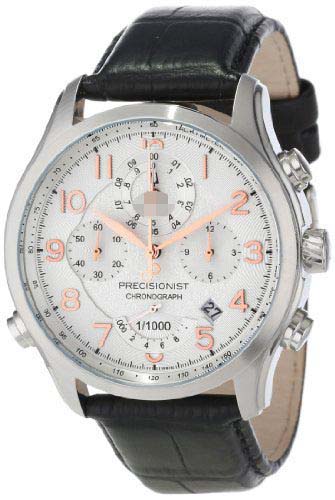
Yet, on the pre-owned and vintage market, the equation changes. Some gold watches can be purchased for close to the scrap value of their gold content, making them remarkably safe acquisitions for those curious about the metal [citation:1]. For instance, a vintage Omega Seamaster De Ville in 18K gold, which sold for €750 in 2005, now contains approximately €1,725 worth of gold at current prices [citation:1]. This concept of an intrinsic material floor offers a certain peace of mind. The evolution of such luxury materials is a constant focus for the best Top Luxury Watch Suppliers, who balance heritage with modern demand.
## The Pragmatic Reality
There are, of course, downsides to consider. Gold is soft and prone to scratches and dings, and its polished surfaces are more susceptible to wear than brushed steel [citation:1]. Safety is another factor; a gold watch, particularly in unfamiliar cities, can be a liability, though this concern varies significantly by location [citation:1]. Despite this, the sheer joy of the material and its documented ability to hold value have spurred a growing interest in gold timepieces. The ecosystem of the modern watch industry has evolved to meet this demand, involving a complex chain of suppliers and manufacturers, from China Watch Manufacturers Wholesale operations to specialized Custom Watch Manufacturers USA who cater to niche markets. This golden equation is a constant, underlying the value of many of the world's most iconic watches.
## The Lunar Legend: A Qualification Forged In Hellfire
In stark contrast to the timeless appeal of gold is the story of the Speedmaster Professional Moonwatch. It is a watch that became an icon not through precious materials, but through brutal, scientific qualification. The story of how the Speedmaster became the Moonwatch is one of the most celebrated in horology [citation:5]. It began in 1964 when NASA engineer James Ragan issued a request for quotation for a chronograph to be used on Gemini and Apollo missions [citation:5]. Unlike a later urban legend, this was a formal government procurement procedure [citation:6]. Only four brands responded, including Omega, Rolex, and Longines, while Hamilton was disqualified for sending a pocket watch [citation:5].
The watches were put through a battery of tests designed to ensure survival in the harsh environment of space, a process that lasted from October 1964 to March 1965 [citation:6]. The Speedmaster (reference 105.003) was the only watch to survive them all [citation:5][citation:6]. The Rolex and Longines watches failed due to issues with heat and humidity [citation:5]. On June 1st, 1965, the Speedmaster was officially qualified for all manned space missions, and just two days later, Ed White wore his Speedmaster on the first US spacewalk [citation:5].
## Apollo 11 And The Modern Heir
The journey culminated on July 20th, 1969, when Buzz Aldrin stepped onto the lunar surface wearing his Speedmaster reference 105.012, cementing its place in history as the "Moonwatch" [citation:6][citation:7]. (Neil Armstrong had left his own Speedmaster in the capsule as a backup for a malfunctioning instrument panel) [citation:6]. The modern iteration of this legend is the Speedmaster Professional reference 310.30.42.50.01.001. This 42mm steel chronograph is powered by the modern Caliber 3861, but with its Hesalite crystal, black dial, and applied indices, it remains visually true to the watch that was once tested to the brink of destruction [citation:2][citation:4][citation:5].
## Conclusion: Two Definitions Of Value
The gold watch and the Moonwatch represent two distinct definitions of value. One is rooted in the physicality of a precious metal, its warmth, its weight, and the inherent worth of its material composition. The other is rooted in achievement, in a rigorous test of endurance, and in the collective human endeavor of space exploration. One offers a tangible, intrinsic foundation for its worth. The other offers a story, a legacy, and a connection to one of humanity's greatest adventures. Ultimately, the truth about any watch lies not just in its material, but in the meaning we ascribe to it.