
# The Sand-Carved Horizon: Why a Flat-Laid Dial and a 75-Year Legacy Redefine the Art of Telling Time
## The First Glance: A Watch That Lies Flat, Yet Stands Tall
There is a moment, when you place a watch on a table, that you either see its back or its face. Most watches choose the former, hiding their dials in a silent plea for wrist-time. But what if a timepiece were designed to be seen—even when you are not wearing it? What if its very architecture demanded to be observed from above, like a miniature topographical map of a desert dune? That is the proposition of a watch that does not just tell time; it *presents* it, flat on its back, with a dial that reads like a celestial compass.
This is a limited edition that celebrates three-quarters of a century of a family's legacy in the Middle Eastern horology scene. But you would not know that from its face. There is no oversized logo, no engraved plaque, no gaudy anniversary badge. Instead, there is a dial that looks like sand—fine, granular, and impossibly warm—with a single, orbiting disc that indicates the minutes. The hour? That is told by a rotating ring at the edge. And the seconds? They are a small, recessed sub-dial that seems to float in the amber light. In the broader ecosystem of independent watchmaking, this piece stands apart not just for its aesthetic, but for its willingness to challenge conventions—a spirit also found among specialised suppliers such as Urethane Watch Vendors, who bring modern material science to traditional strap-making.
## The Dial That Remembers Dunes and Decades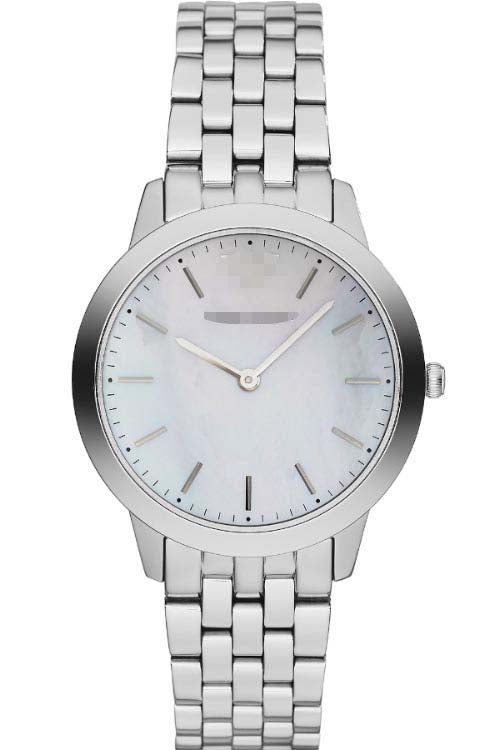
The colour is not gold, nor beige, nor copper. It is the colour of sun-baked quartz—a hue that shifts from pale champagne to deep terracotta as the light moves across the room. The texture is achieved through a proprietary process that involves micro-beading and a translucent lacquer, giving it the appearance of wind-blown sand. This is not a dial you read; it is a dial you *feel*. Compared to the glossy, lacquered dials of other high-end sports watches—think of a certain Swiss brand's "salmon" dial or a Japanese brand's "snowflake"—this one feels organic, almost tactile, as if you could run your finger across it and leave a trail.
The layout is radical, yet intuitive. The minute disc is a large, circular aperture at the centre, with a single white line that points to the hour ring. The hour ring itself rotates, so the current hour is always aligned with a fixed marker at the top. It takes about a day to get used to; after that, reading the time becomes a subconscious act, like reading a sundial. The seconds sub-dial at 6 o'clock is a rotating disc with a single dot, sweeping in a continuous motion that is hypnotic to watch. For those who appreciate natural materials in horology, the warmth of this sand-toned dial evokes a different kind of craftsmanship—one that is also celebrated by Wooden Watch Manufacturers, who transform timber into wearable art, proving that texture and tradition can coexist beautifully.
## Flat-Lay: The Philosophy of the Horizontal Watch
The case is 39mm in diameter and a mere 11.5mm thick, but its true genius lies in how it sits. The lugs are curved downwards, allowing the watch to lie perfectly flat on a desk, with the dial parallel to the surface. This is not an accident; it is a deliberate design choice that invites you to leave it out, to admire it, to use it as a desk clock when it is not on your wrist. The crown is at 2 o'clock, and it is a massive, fluted cylinder that is easy to grip, even when the watch is lying flat. The winding action is buttery, and the lack of a traditional crown guard means you can access it from almost any angle.
Wearing it is a different experience. The flat-lay design means the caseback is also flat, so it sits flush against the skin. The leather strap is a dark grey alligator with a subtle grain, and it is fitted with a quick-release system that allows you to swap it for a rubber or NATO strap in seconds. The buckle is a simple pin-buckle, which feels appropriate for a watch that eschews ostentation in favour of functionality. The weight is light—about 70 grams—so it disappears on the wrist, but the visual presence is undeniable. It is a conversation starter, not because it shouts, but because it *gestures*.
## The Movement: A Quiet Revolution
Inside beats an automatic calibre with a 38-hour power reserve—modest by today's standards, but perfectly adequate for a watch that begs to be wound daily. The rotor is skeletonised and decorated with a sand-blasted finish that matches the dial. But the real innovation is the oil-filled system that dampens the oscillations of the balance wheel, making the seconds hand glide with a smoothness that rivals a spring-driven clock. It is a movement that rewards close inspection, with a degree of finishing that is rare at this price point.
Compared to other independent watchmakers—say, a certain brand that uses a "central chronograph" with rotating discs, or another that uses a "jumping hour" module—this one feels more grounded, more *earthbound*. It is not trying to reinvent the wheel; it is trying to make the wheel feel like it was carved from stone. And for those who are inspired by such engineering to embark on their own horological journey, the ability to Customise Your Own Watch offers a gateway to personal expression, allowing enthusiasts to select movements, cases, and dials that reflect their individual tastes—much like the bespoke spirit that drove the creation of this anniversary piece.
## The Anniversary: A Subtle Nod to Legacy
The 75th-anniversary tribute is integrated into the dial with a small, discreet star at the 12 o'clock position, rendered in the same sand-coloured lacquer as the rest of the dial. There is no number, no "75" badge—just a quiet acknowledgment that this watch exists because someone, decades ago, had a vision for bringing fine timepieces to a region that was just beginning to discover the joys of mechanical horology. It is a mark of respect, not a marketing tool.
This is a limited edition of 75 pieces, and each one comes with a leather travel pouch and a certificate signed by the family patriarch. It is a collector's item, certainly, but it is also a daily driver—a watch that can be worn to a boardroom meeting or a beachside dinner with equal grace. The understated elegance of its design reminds us that the most powerful statements are often the quietest, a lesson that resonates far beyond the world of watches.
## The Final Impression: A Watch That Tells More Than Time
After a week of living with this watch—placing it flat on my desk each night, winding it each morning, and watching the sand-coloured disc rotate through the hours—I have come to see it not as a timepiece, but as a companion. It does not demand attention; it invites contemplation. It does not shout its heritage; it whispers it through the texture of its dial and the fluidity of its hands.
Is it for everyone? No. The unorthodox reading style may frustrate those who prefer a quick glance. The leather strap, while supple, may not suit those who live in humid climates. But for those who appreciate the intersection of art and engineering, of tradition and innovation, this is a watch that rewards patience. It is a sand-dial that celebrates a desert legacy, a flat-lay that encourages you to see time from a different angle, and a limited edition that reminds us that the best things in life are not mass-produced—they are crafted.
Place it flat on your table. Watch the light play across its granular surface. And let it remind you that time, like sand, is always shifting—but some things, like the spirit of a 75-year-old dream, remain constant.